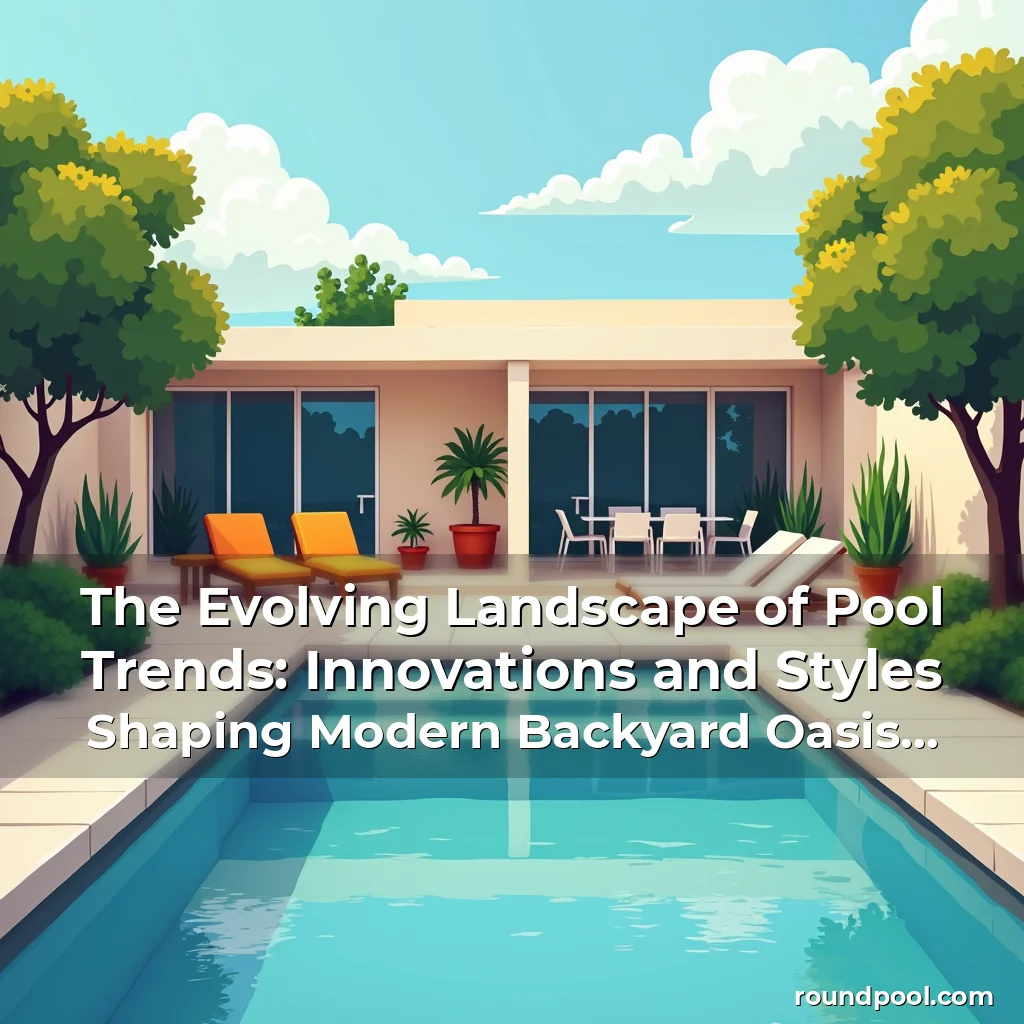
The Evolving Landscape of Pool Trends: Innovations and Styles Shaping Modern Backyard Oasis Design
In an era where homeowners are redefining their outdoor living spaces, backyard pools have transcended traditional aesthetics to become dynamic extensions of modern lifestyle needs. From smart technology integration to eco-friendly materials, contemporary pool design reflects a convergence of functionality, sustainability, and aesthetic innovation. As we explore the latest trends shaping the global pool industry, we uncover how these developments cater to diverse preferences while addressing environmental concerns.
This exploration delves into transformative innovations such as solar heating systems, automated water features, and modular construction methods. It also examines shifting consumer priorities—from minimalist designs to immersive entertainment experiences—that continue to redefine what constitutes a luxury backyard retreat in today’s market.
Eco-Conscious Materials Redefining Pool Construction
The shift toward environmentally responsible building practices has profoundly impacted pool construction techniques. Traditional concrete and plaster finishes are increasingly being replaced by sustainable alternatives that reduce both maintenance demands and ecological footprints. These new materials not only enhance durability but also align with growing homeowner interest in green technologies.
One notable advancement involves the use of fiber-reinforced polymer composites, which offer exceptional resistance to cracks and fading compared to conventional options. This material innovation extends the lifespan of pools while minimizing the need for chemical treatments that can harm local ecosystems.
- Recycled aggregate: Crushed glass and reclaimed stone are now commonly used in pool base layers, reducing demand for virgin resources and providing unique visual textures.
- Low-VOC coatings: Advanced paint formulations eliminate harmful volatile organic compounds, improving indoor air quality when combined with proper ventilation systems near pool areas.
The adoption of these materials reflects a broader trend among contractors who prioritize long-term cost savings through reduced maintenance requirements. Homeowners benefit from lower utility bills due to improved insulation properties inherent in many eco-conscious construction choices.
As climate change awareness continues to grow, the preference for sustainable pool components shows no signs of waning. Builders report increasing requests for solutions that minimize energy consumption without compromising comfort levels—a balance achieved through innovative engineering approaches.
Sustainable Water Management Systems Gain Momentum
Pools are significant contributors to household water usage, prompting designers to implement advanced conservation strategies. The rise of greywater recycling systems allows households to repurpose shower and sink runoff for pool topping off purposes, significantly reducing municipal water dependency.
Smart filtration units equipped with IoT sensors optimize cleaning cycles based on real-time water quality data. These devices adjust chlorine levels automatically, ensuring optimal sanitation while conserving chemicals that could otherwise damage aquatic environments.
Water Conservation Statistics and Impact Analysis
According to recent studies, homes with integrated water management systems save approximately 60% more water than those relying solely on public supply networks. This reduction translates to substantial financial benefits over time—averaging $850 annually in savings across different geographic regions.
Moreover, communities adopting widespread implementation of these systems experience measurable improvements in groundwater recharge rates. In drought-prone areas like Southern California, cities reporting higher adoption rates show increased resilience against prolonged dry spells.
The economic incentives behind sustainable water management extend beyond individual households. Municipalities benefit from decreased strain on aging infrastructure, leading to lower repair costs and extended system lifespans. This creates a win-win scenario for both consumers and urban planners alike.
With rising installation costs decreasing rapidly due to technological advancements, more homeowners find these systems financially viable within standard renovation budgets. Contractors specializing in green plumbing report growth rates exceeding 40% year-over-year in relevant service sectors.
Integration of Smart Technology Enhances User Experience
The proliferation of Internet of Things (IoT) devices has revolutionized pool operation and maintenance protocols. Automated control panels allow users to manage temperature settings, lighting schemes, and filtration schedules remotely via smartphone applications—an evolution that dramatically improves convenience factors.
Advanced analytics provided by connected systems enable predictive maintenance alerts before issues escalate into costly repairs. Machine learning algorithms analyze historical performance data to identify patterns indicative of potential failures in pump systems or heater components.
Security enhancements form another crucial aspect of smart pool integration. Motion-sensing cameras linked to mobile notifications help deter unauthorized access while providing peace of mind during periods of absence. Some models even feature automatic shut-off mechanisms triggered by unusual activity patterns detected around the pool area.
Energy efficiency gains are equally impressive; intelligent thermostats learn user behavior to maintain ideal temperatures at minimal power consumption levels. When paired with renewable energy sources like rooftop solar arrays, these systems achieve remarkable reductions in electricity bills.
Rising Popularity of Natural Swimming Pools
Natural swimming pools represent a paradigm shift away from chemically treated water bodies towards self-cleaning ecosystems supported by aquatic plants and biological filters. This approach eliminates reliance on harsh disinfectants while creating visually striking landscapes that blend seamlessly with surrounding gardens.
Designers emphasize the importance of balancing plant life with water circulation dynamics to ensure effective purification processes occur naturally. This requires careful consideration of species selection based on regional climates and soil conditions specific to each project site.
While initial setup costs may be higher than conventional chlorinated pools, long-term savings emerge from reduced chemical expenditures and lower maintenance requirements. Additionally, natural pools contribute positively to biodiversity by supporting native wildlife populations.
Homeowners seeking therapeutic relaxation opportunities often appreciate the calming effect produced by these organic environments. The absence of strong chemical odors enhances sensory experiences associated with leisure activities conducted in such spaces.
Customization Through Modular Design Approaches
Modular construction methodologies are transforming how pools are conceptualized and implemented. Prefabricated components manufactured off-site arrive ready for assembly, drastically cutting down overall project timelines while maintaining high standards of craftsmanship.
This flexibility enables creative configurations tailored specifically to property dimensions and owner preferences. Spas, waterslides, and infinity edge elements can be incorporated with relative ease using standardized building blocks designed for seamless integration.
The adaptability of modular systems proves particularly advantageous in challenging terrains where excavation might prove difficult or prohibitively expensive. By leveraging pre-engineered solutions, builders overcome topographical obstacles efficiently without sacrificing aesthetic appeal.
Additionally, modular frameworks facilitate future expansion possibilities. Owners can initially construct core structures knowing they retain capacity to add additional features later according to evolving needs or changing family circumstances.
Emerging Aesthetic Preferences Among Contemporary Homeowners
Current design philosophies reflect a departure from ostentatious displays favoring understated elegance instead. Clean lines, neutral color palettes, and subtle textural contrasts define modern pool aesthetics that complement rather than overwhelm adjacent architectural elements.
Materials selections now prioritize weather-resistance alongside visual harmony. Textured concrete finishes gain popularity for their ability to mimic natural rock formations while offering superior slip resistance characteristics essential for safety considerations.
Multifunctional seating arrangements incorporate built-in lounges and dining tables, maximizing usable space without cluttering the landscape. Integrated fire pits create ambiance while serving practical purposes related to evening gatherings and social events.
Lighting becomes an integral component of contemporary poolscapes, extending usability well past sunset hours. LED strips embedded along coping edges provide soft illumination enhancing nighttime visibility and adding dramatic visual effects depending upon programmed sequences.
Advancements in Heating Technologies Improve Year-Round Enjoyment
Modern heating solutions address seasonal limitations traditionally imposed by fluctuating ambient temperatures. Solar-heated systems utilize vacuum tube collectors positioned strategically to maximize heat absorption capabilities throughout various daylight exposure scenarios.
Dual-source heaters combining electric and gas-powered mechanisms offer versatile temperature regulation suitable for extreme climatic variations. These hybrid systems activate appropriate modes depending on prevailing weather conditions monitored through integrated sensors.
Heat pumps represent another breakthrough allowing efficient warmth generation even during cooler months. Their energy-efficient operation makes them particularly appealing for regions experiencing mild winters yet desiring consistent water temperatures.
Smart controls synchronize with existing home automation platforms enabling centralized management of pool heating alongside other domestic utilities. This level of integration streamlines operational complexity making complex systems feel intuitively manageable.
Community Engagement Through Shared Pool Spaces
Cooperative ownership models are gaining traction in residential neighborhoods aiming to foster stronger communal bonds. Shared pool facilities promote interaction among residents while distributing maintenance responsibilities equitably across participating households.
These collaborative ventures require meticulous planning regarding accessibility, security measures, and equitable usage scheduling protocols. Properly structured agreements establish clear expectations concerning upkeep duties and emergency response procedures.
Developers recognize the value proposition offered by shared amenities in attracting buyers willing to pay premium prices for enhanced community engagement opportunities. Real estate agents note increased sales velocity among properties featuring collectively managed recreational assets.
Technological integrations play vital roles in managing collective spaces effectively. Digital reservation systems streamline booking processes while surveillance cameras ensure adherence to established rules governing facility utilization.
Evolution of Safety Standards and Emergency Response Protocols
Continuous refinement of safety regulations ensures continued protection of swimmers against preventable accidents. Enhanced fencing guidelines mandate minimum height specifications coupled with self-locking gate mechanisms preventing unsupervised access by young children.
Automated monitoring systems detect unusual movement patterns triggering immediate alert responses through interconnected communication networks linking caregivers’ smartphones with central control stations located either at premises or remote monitoring centers.
Emergency preparedness kits containing first aid supplies, life-saving equipment, and distress signaling apparatuses remain essential components of any properly maintained pool environment. Regular training sessions covering CPR techniques and drowning prevention drills further bolster readiness levels among frequent users.
Certification programs verify compliance with updated safety benchmarks ensuring all installations meet current legal requirements regardless of location-specific ordinances affecting private property boundaries.
Future Outlook and Predictive Industry Developments
Ongoing research initiatives suggest promising directions for next-generation pool technologies incorporating nanotechnology applications aimed at purifying water at molecular levels without resorting to conventional chemical additives.
Artificial intelligence advancements promise adaptive filtration systems capable of adjusting cleaning intensity dynamically based on actual contamination levels detected within circulating water volumes. Such precision reduces unnecessary chemical dispersion preserving ecological integrity.
Projected demographic shifts indicate heightened demand for accessible pool designs accommodating individuals with mobility challenges. Universal design principles will likely influence forthcoming product development cycles emphasizing inclusivity aspects previously overlooked.
Global warming mitigation efforts drive continued emphasis on carbon-neutral construction methodologies. Architects anticipate greater prevalence of zero-emission building practices utilizing regenerative materials sourced entirely from closed-loop production cycles.
As digital transformation accelerates across industries, pool sector professionals must remain vigilant about cybersecurity threats targeting connected devices susceptible to hacking attempts potentially compromising personal information stored within networked systems.
The convergence of these emerging forces positions the pool industry at a pivotal juncture poised for sustained innovation fueled by interdisciplinary collaborations bridging fields ranging from biotechnology to quantum computing.
Conclusion
The ongoing evolution of pool design and technology underscores a fundamental truth: modern backyard oases are no longer static fixtures but dynamic expressions of contemporary living values centered around sustainability, connectivity, and holistic wellness.
By embracing these progressive trends, homeowners not only elevate their outdoor living experiences but also contribute meaningfully to broader environmental stewardship goals. As the industry continues its trajectory toward smarter, greener, and more inclusive solutions, the future promises exciting transformations reshaping our relationship with water-based recreation spaces.