
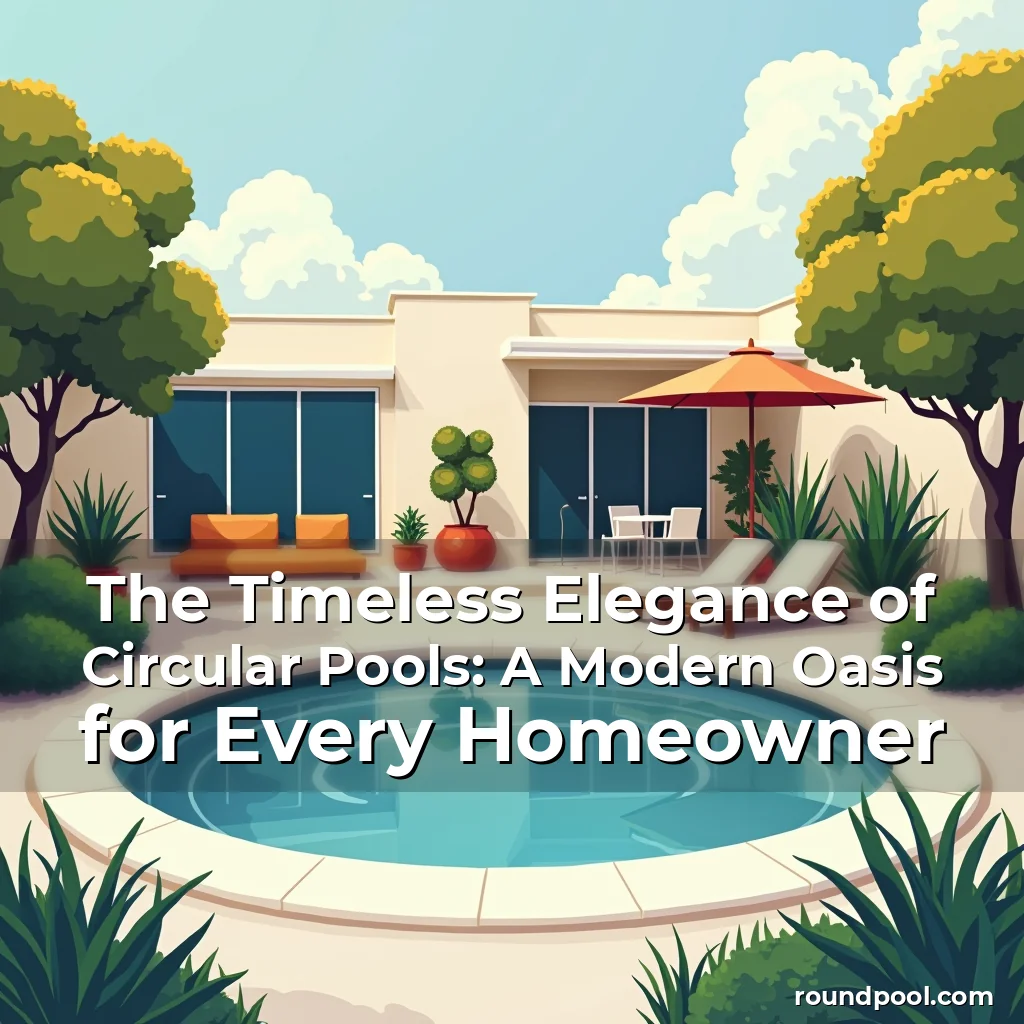
The Timeless Elegance of Circular Pools: A Modern Oasis for Every Homeowner
Circular pools have long captivated homeowners with their seamless blend of aesthetic appeal and functional design. Unlike traditional rectangular or freeform pools, these rounded sanctuaries offer a unique visual impact that enhances any landscape. Their symmetrical form creates an inviting focal point, making them ideal for both contemporary and classic architectural styles.
With increasing emphasis on sustainable living, circular pools are gaining renewed popularity as efficient water features. The shape allows for optimized water circulation patterns, reducing energy consumption while maintaining crystal-clear water quality. This combination of beauty and efficiency makes circular pools an attractive option for environmentally conscious consumers seeking modern luxury.
Architectural Harmony: How Circles Complement Diverse Styles
Circular pool designs possess remarkable versatility that seamlessly integrates with various architectural aesthetics. From sleek modern homes to rustic country estates, the curvature of these pools naturally complements different design philosophies. Their smooth lines create a sense of balance that harmonizes with both minimalist and ornate structures alike.
This adaptability is particularly evident when considering how circular pools interact with surrounding elements. They work exceptionally well with open-concept patios, cascading terraces, and even indoor-outdoor living spaces. The unbroken curve provides a natural flow between different areas of the property without disrupting existing layouts.
For contemporary residences featuring clean lines and geometric shapes, circular pools serve as striking counterpoints. In contrast, they enhance traditional properties by softening sharp edges and creating organic transitions across landscapes. This duality makes them suitable for virtually any home improvement project involving outdoor recreation areas.
- Symmetry: The perfect circle embodies mathematical precision which adds sophistication to any space
- Versatility: Works equally well with modernist glass facades or historic stonework
- Integration: Naturally flows with curved pathways, arches, and other round elements in landscaping
Eco-Friendly Innovations Shaping the Future of Circular Pools
Modern advancements in pool technology are revolutionizing how we approach circular pool installations. Smart filtration systems now allow for precise chemical management, significantly reducing maintenance requirements. These innovations ensure that the environmental benefits of circular designs remain intact while enhancing user experience.
One notable development involves solar-powered heating solutions tailored specifically for circular configurations. The streamlined shape maximizes surface area expo Combined with advanced insulation techniques, this results in year-round usability with minimal energy expenditure.
Sustainable Materials Revolutionizing Construction
Pioneering manufacturers are developing eco-conscious materials that maintain structural integrity while minimizing ecological footprints. Recycled concrete blends and low-VOC resins represent significant strides towards greener construction practices. These materials reduce resource depletion while preserving the durability expected from high-quality pool installations.
Additionally, innovative liner technologies are emerging that incorporate biodegradable components. While still in early stages of market penetration, these developments promise to transform the industry’s sustainability profile without compromising performance standards. As consumer demand grows, so too will investment in environmentally responsible production methods.
Design Considerations for Optimal Functionality
Selecting the right location is crucial for maximizing both enjoyment and efficiency of a circular pool. Factors such as sun expo Strategic placement ensures optimal comfort levels throughout varying weather conditions.
The size of the pool should align with intended usage patterns. Families requiring ample swimming space may need larger diameter options, whereas smaller residential lots benefit from compact models. Proper sizing prevents overcrowding while ensuring adequate room for recreational activities.
When determining depth specifications, consider primary functions beyond simple relaxation. Deeper sections can accommodate lap swimming needs, while shallower areas provide safe zones for children or lounging. This tiered approach optimizes spatial utilization according to individual preferences.
Landscaping integration plays a vital role in overall functionality. Thoughtful planting choices around the pool perimeter help regulate temperature, filter air pollutants, and add visual interest through seasonal color changes. Native plant species often prove most beneficial due to their established adaptation to local climate conditions.
Advanced Engineering Behind Circular Pool Structures
The engineering principles governing circular pools differ significantly from conventional rectangular designs. Specialized reinforcement strategies address stress distribution challenges inherent in curvilinear forms. Engineers employ computer modeling software to simulate load scenarios and optimize structural integrity before construction begins.
Reinforced concrete remains the preferred material for constructing permanent circular pools. Its compressive strength combined with flexibility makes it ideally suited for complex geometries. Advanced curing processes ensure dimensional stability over time, preventing warping or cracking issues associated with improper installation techniques.
Innovative steel framing systems have also emerged for above-ground circular models. These modular constructions utilize interlocking components designed for easy assembly while maintaining rigidity required for water containment. Such innovations expand accessibility to quality pool experiences across diverse geographic regions.
Water circulation systems in circular pools require specialized pump configurations to maintain uniform current distribution. Unique plumbing arrangements facilitate efficient filtration cycles that preserve water clarity without excessive energy consumption. These engineered solutions reflect ongoing advancements in aquatic technology.
Maintenance Advantages of Circular Design
The distinctive geometry of circular pools contributes to reduced maintenance demands compared to angular alternatives. Smooth curves minimize accumulation points where debris tends to collect, resulting in easier cleaning routines. This characteristic proves especially advantageous for busy households seeking hassle-free pool care.
Chemical balance monitoring becomes simpler with consistent water movement patterns generated by the circular configuration. Uniform currents prevent stratification issues that commonly plague irregularly shaped pools. Consequently, fewer adjustments are typically required to maintain optimal water chemistry parameters.
Equipment access points are strategically positioned along the circumference rather than at corners, facilitating routine servicing tasks. This layout improves workflow efficiency for professional technicians performing inspections and maintenance procedures. It also enables better visibility for owners conducting self-maintenance checks.
Drainage systems integrated within the structure itself eliminate potential pooling issues after rain events. Precisely calculated slope gradients direct excess water away from sensitive areas, protecting surrounding surfaces from erosion or staining damage. These thoughtful design elements contribute to long-term structural integrity.
Fashion Trends Influencing Contemporary Circular Pool Designs
Current interior design trends are reshaping expectations regarding circular pool aesthetics. Minimalist approaches emphasize clean lines and neutral palettes, favoring monochromatic schemes over bold colors. This shift reflects broader societal movements toward simplicity and mindfulness in personal environments.
Contrastingly, some designers are embracing vibrant hues to make strong stylistic statements. Accent walls, mosaic tile inserts, and colored plaster finishes create dynamic visual effects that personalize each space uniquely. These creative expressions cater to individuals seeking expressive yet cohesive outdoor living areas.
Smart home integration has become increasingly prevalent in modern pool installations. Automated lighting systems respond to occupancy sensors, adjusting brightness levels based on ambient light conditions. Touchscreen controls enable remote operation of filtration systems, heaters, and entertainment features from anywhere in the house.
Outdoor kitchen extensions adjacent to circular pools are gaining traction among homeowners prioritizing convenience. These culinary hubs feature built-in grills, refrigeration units, and countertops that extend seamlessly from the pool deck. Such integrations redefine backyard spaces as multifunctional lifestyle centers.
Cost Analysis and Investment Value
Initial costs for circular pool installations vary depending on numerous factors including size, materials, and additional features. Basic fiberglass models start at approximately $25,000-$40,000, while custom concrete designs range upwards of $60,000 or more. These figures include excavation, permits, and essential equipment purchases.
Ongoing maintenance expenses generally fall within similar ranges as standard rectangular pools. However, the unique advantages of circular design often result in lower long-term costs due to reduced repair frequency and extended lifespan of structural components. Regular upkeep remains critical regardless of pool type to preserve value and functionality.
Resale value considerations reveal another compelling aspect of circular pool investments. Properties featuring well-maintained circular pools tend to command higher prices than those with neglected or outdated pool systems. This increased marketability offers substantial return on investment opportunities for discerning buyers.
Financing options available through mortgage programs or home equity loans further enhance affordability prospects. Many lending institutions recognize the appreciating nature of properly maintained pools, offering favorable terms for qualified applicants seeking to fund their aquatic projects.
Community Building Through Shared Spaces
Circular pools inherently foster social interaction by promoting equal access from all sides. Unlike elongated pools that encourage linear movement, their symmetrical layout invites group gatherings centered around the central axis. This configuration facilitates natural conversation dynamics and inclusive participation in recreational activities.
In neighborhood settings, shared circular pools create communal gathering places that strengthen interpersonal relationships. The open design encourages spontaneous interactions while providing privacy through strategic landscaping buffers. Such spaces become catalysts for building lasting friendships among residents.
Family-oriented communities benefit greatly from the safety aspects provided by circular designs. Clear sightlines from multiple vantage points enhance supervision capabilities for parents monitoring children near the water. This added layer of security promotes greater peace of mind for families utilizing public or semi-public pool facilities.
Commercial applications demonstrate the versatility of circular pools beyond private residences. Hotels, resorts, and wellness centers leverage these designs to create immersive spa experiences that combine relaxation with sensory stimulation through controlled water features and ambiance enhancements.
Conclusion
Circular pools represent more than just an alternative to traditional pool designs; they embody a philosophy of balanced elegance that enhances both aesthetics and functionality. Their ability to integrate seamlessly with diverse architectural styles while delivering practical benefits positions them as enduring fixtures in modern outdoor spaces.
As innovation continues to reshape the pool industry, circular pools stand poised to evolve alongside technological advancements and shifting consumer preferences. By understanding the unique advantages offered by their design, homeowners can confidently invest in creating personalized oases that enrich daily life for generations to come.